
Our Story
Started With Tanks. Building an Industry.
Tech Farm Inc. began in 2016 with a simple conviction: the United States shouldn't depend on other countries for one of the world's most important food fish. Nearly a decade later, we operate the second-largest tilapia farm in the nation — and we're just getting started.
How We Got Here
From One Farm to a National Operation
Tech Farm started in Southern Florida with a straightforward question: why is the United States — the world's largest economy — importing 95% of one of the most consumed fish on the planet? Tilapia is the third most farmed fish globally, eaten by hundreds of millions of people. Yet American consumers were almost entirely dependent on frozen product shipped from China, Indonesia, and Central America. The supply chain was long, the freshness was compromised, and billions of dollars were flowing out of the country every year.
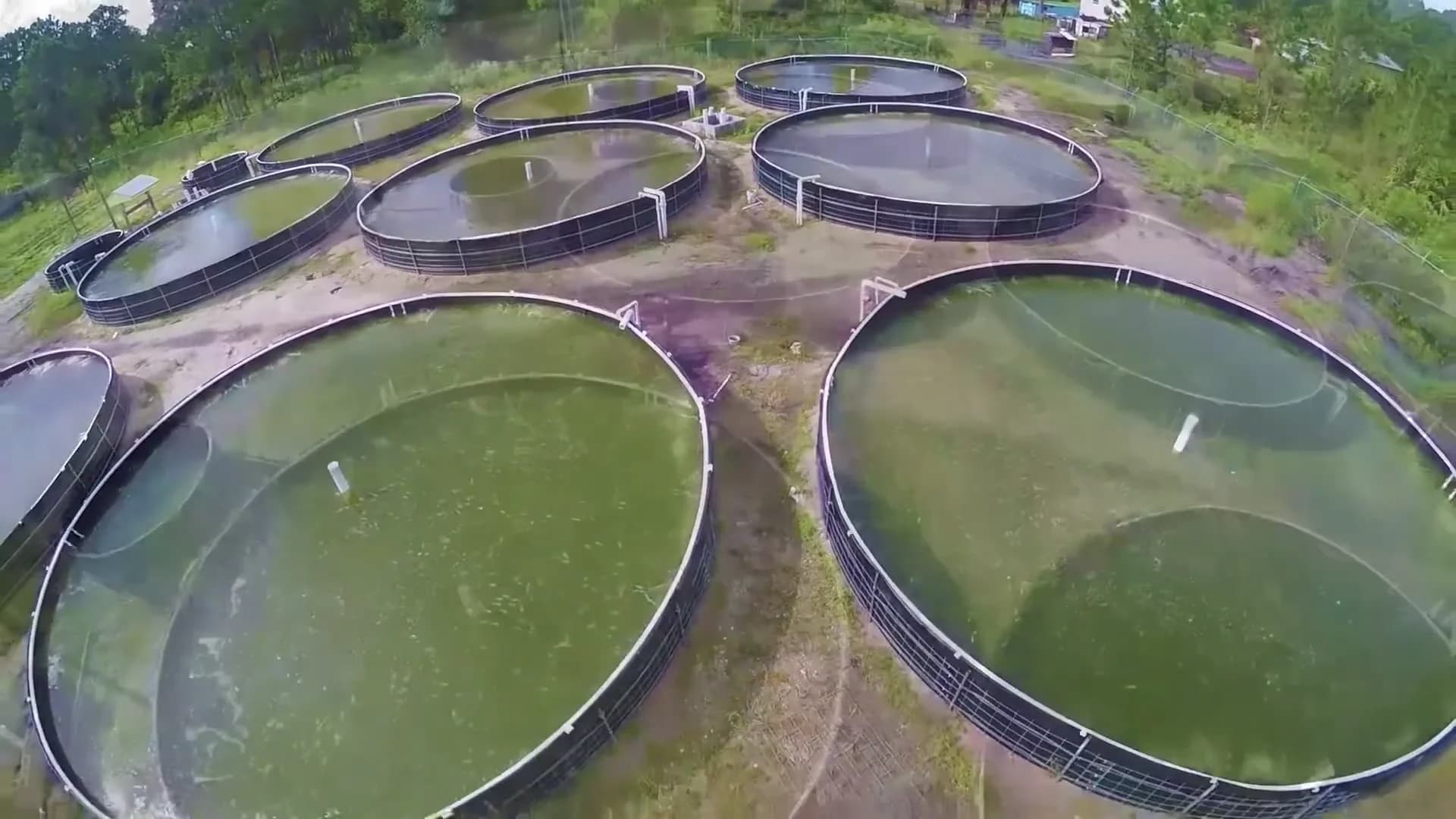
We set out to change that. Starting in Clewiston — a small agricultural town on the southern shore of Lake Okeechobee — we built our first farm using Recirculating Aquaculture Systems. RAS technology allowed us to raise tilapia in clean, controlled water that gets filtered and reused continuously, producing fish year-round with no dependence on weather, seasons, or natural water bodies. The system uses 90% less water than conventional agriculture and discharges nothing into the environment.
The early years were about learning — testing feed conversion ratios, dialing in water chemistry, figuring out how to grow tilapia to market size as efficiently as possible. We grew from a single location to three farms across Southern Florida. We expanded from dozens of tanks to over 88. We moved from small-batch output to one of the largest tilapia operations in the country.
Today, Tech Farm is the 2nd largest tilapia farm in the United States. But scale was never the end goal — it was a necessary step toward something bigger. We're building the operational knowledge, the production data, and the technology infrastructure that the entire domestic tilapia industry needs in order to grow. We test so that other farmers don't have to start from scratch. We publish what we learn. And we're investing in AI-driven monitoring, solar energy, and waste-to-value systems that will make fish farming not just sustainable, but economically unstoppable.
See It For Yourself
A Bird's Eye View of Our Operation
Drone footage of our Clewiston facility — 30+ tanks, integrated crop rows, and the Florida landscape that makes it all possible.
By the Numbers
The Scale of What We've Built
0
Operating Farms
Across Southern Florida
0+
Production Tanks
In continuous operation
2nd
Largest
Tilapia farm in the U.S.
0%
Water Reuse
Through RAS recirculation
0
Zero Discharge
No untreated water released
0
Founded
Years of continuous operation
Our Team
Built by People Who Do the Work
Tech Farm is run by operators, not spectators. Our team lives in the day-to-day reality of water quality management, feeding schedules, harvest logistics, and equipment maintenance. We combine hands-on farming experience with a technology-forward mindset — always looking for the data point or the system upgrade that makes the next cycle better than the last.
![[Founder Name]](/_next/image?url=%2Fimages%2Fteam%2Ffounder.webp&w=3840&q=75)
[Founder Name]
Founder & CEO
Founded Tech Farm in 2016 with a vision of building scalable, technology-driven tilapia production in the United States. Oversees operations across all three Florida farms and leads the company's expansion strategy.
[Operations Lead]
Head of Farm Operations
Manages daily operations including water quality monitoring, feeding protocols, grading schedules, and harvest planning across all production facilities.
Action Required
Provide real team member names, titles, bios, and professional photographs to complete this section.
Our Journey
From Startup to Scale
Founded in Clewiston
Tech Farm established its first RAS facility in Clewiston, FL on the southern shore of Lake Okeechobee.
First Production Cycle
Completed initial production cycles, refining water chemistry and feed conversion protocols.
Second Farm Opens
Expanded to a second location in Clewiston to increase production capacity and meet growing demand.
Homestead Farm Launches
Opened our third farm in Homestead, FL — strategically positioned to serve the Miami metropolitan market.
88+ Tanks Online
Scaled to over 88 production tanks across three facilities, becoming the 2nd largest tilapia farm in the U.S.
Technology & Expansion
Investing in AI-driven monitoring, solar energy integration, and circular economy systems to define the next era of domestic aquaculture.
What Drives Us
Four Principles. No Compromises.
Technology as Leverage
We don't farm the old way. Every decision — from feeding schedules to water chemistry to harvest timing — is driven by data. We're building toward AI-powered monitoring because we believe technology is what makes small farms competitive and large farms efficient.
Sustainability as Default
Zero discharge isn't a marketing claim — it's how our systems work. RAS technology recirculates water, captures waste, and produces fish without taking from or polluting the natural environment. We're working toward a fully circular operation where nothing is wasted.
Industry Over Competition
The U.S. tilapia industry doesn't need 147 farms guarding their secrets. It needs 1,500 farms sharing what works. We publish our research, test new techniques openly, and believe that growing the entire market benefits everyone — including us.
American-Made, Always
Every fish we sell is hatched, raised, and harvested in the United States. No imports, no middlemen from overseas, no frozen product that spent three weeks on a container ship. When you buy from Tech Farm, you know exactly where your food came from and who grew it.
Why Tilapia
The Most Important Fish You're Not Thinking About
Tilapia is the third most farmed fish on earth — behind only carp and salmon — and for good reason. It grows fast, tolerates a wide range of conditions, is naturally resistant to disease, and produces a mild, white-fleshed fillet that works in virtually any cuisine. Per 100 grams, tilapia delivers 20g of protein at just 96 calories — making it one of the leanest animal proteins available. It's on the FDA's "Best Choices" list for mercury safety, and research consistently shows that replacing red meat with fish reduces the risk of heart disease, diabetes, and cognitive decline.
For farmers, tilapia is equally compelling. It's a filter-feeder that thrives in the high-density conditions of RAS and biofloc systems. It reaches market size in 6–9 months. And in the U.S. market, domestic tilapia commands a premium over imports because buyers increasingly want freshness, traceability, and a local supply chain they can trust.
Want to Know More?
Dive into our technology, explore our sustainability impact, or get in touch to start a conversation.